Community Health Center Connects Patients to Care
Renee Rodriguez-Goodemote, MD, primary care physician and medical director of Saratoga Community Health Center, believes being a physician is a privilege—and is dedicated to using her platform for change.
“How can I use my role to elevate the stories of my patients and members of the community hesitant to seek medical care?” she asked. “We have a tremendous opportunity to meet our neighbors where they are, offer opportunities to engage with them, and ultimately help them get better so our entire community can thrive.”
From the beginning of her interest in medicine, Dr. Rodriguez-Goodemote has been drawn to working with marginalized groups. She worked with refugees in the Utica area and the unhoused in the Capital Region, and after service-learning experience and good mentors at Albany Medical College, she focused on community-oriented primary care.
Saratoga Hospital opened the Community Health Center in 2013 with the goal of making comprehensive health care accessible to all members of the community regardless of income or insurance, keeping people healthy with preventive and primary care instead of in crisis at the Emergency Department.
For many patients, the Center offers their first experience with routine health care, providing primary, dental, behavioral, and addiction medicine services.
“We use a unique, team-based, patient-centered model working to improve the health and wellness of the broader community at large,” said Dr. Rodriguez-Goodemote. “In our area we have high income inequity and gaps in quality of life and education that significantly impact the health of our neighbors. At the Community Health Center, we’re working to keep people healthy, living and being well.”
To address social determinants—the nonmedical conditions—of health, the Center works with mental health counselors, housing projects, and shelters for the unhoused to offer screenings and educational programs, building relationships by offering opportunities for the same person to engage over time.
“It’s important to have enough programs to create avenues for people to connect with us,” she said. “That’s how we can address generational poverty.”
Focus on Service
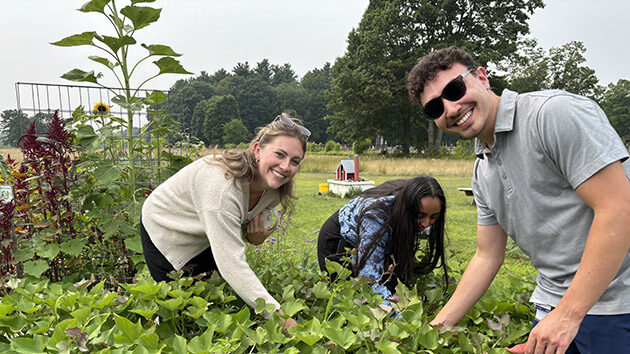
Every summer, students from Albany Medical College join the Community Health Center for a program called Summer of Service where students identify a real community need and develop a sustainable solution. Recent projects have focused on building trust with the unhoused and addressing food insecurity.
Medical student Savita Madhankumar worked with local farmers and nutrition experts to create a cookbook tailored to Community Health Center patients with chronic illnesses who receive weekly boxes of produce.
“They had the ingredients, but not the confidence or tools to turn them into meals they enjoyed and that supported their health,” Madhankumar said. The recipes use locally-sourced produce and minimal equipment, making healthy eating more achievable for patients managing conditions such as Type 2 diabetes, hypertension, and obesity. “Programs like this show how health care systems and local farms can work together to improve health in meaningful, sustainable ways.”
Dr. Rodriguez-Goodemote hopes her students bring these experiences into their specialties—from primary care to surgery.
“Service-learning opportunities at Albany Med are special,” she said. “They show how our work both in and outside of the office are critical to improving the lives of patients and our communities.”