Researchers Awarded Ongoing Funding to Study Rare Genetic Disease
Two Albany Medical College research scientists have been awarded ongoing funding from the newly established Allman Institute for Personalized Medicine to study a rare but severe genetic disorder.
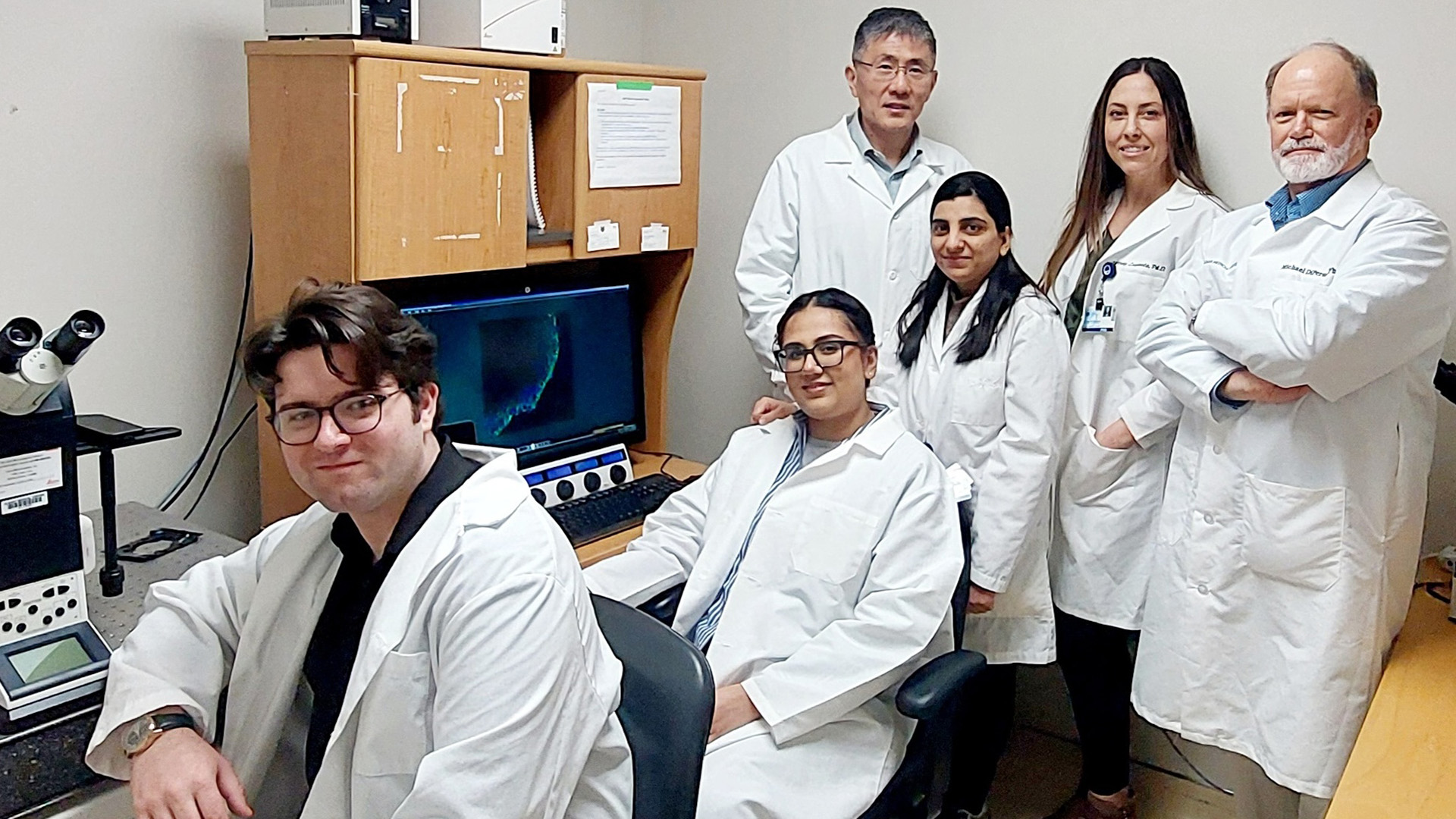
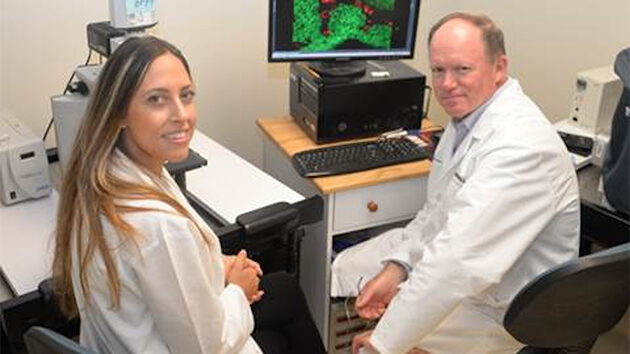
Michael DiPersio, PhD, vice chair of research in the Department of Surgery and professor in the Department of Molecular and Cellular Physiology, and Whitney Longmate, PhD, assistant professor in the Departments of Surgery and Molecular and Cellular Physiology, have been awarded $323,600 to date to investigate the genetic and molecular mechanisms underlying ILNEB (Interstitial Lung disease, Nephrotic syndrome, and Epidermolysis Bullosa).
Caused by mutations in the ITGA3 integrin gene, ILNEB impacts the lungs, kidneys, and skin, and is characterized by skin blistering, progressive lung disease, and kidney failure. A life-threatening, multiorgan disorder, it is often fatal within the first few months of life.
Integrins are receptors that help cells bind to and communicate with other cells. Dr. DiPersio’s long-standing expertise in integrin biology—his 1997 study in the Journal of Cell Biology helped anticipate the discovery of ILNEB in human patients in 2012—led the Allman Institute to him.
Together, he and Dr. Longmate, whose research focuses on epidermal integrins, will work closely with the institute and its scientific team toward the goal of developing treatments for ILNEB.
“We’re currently developing an animal model that mimics the human disease,” explained Dr. DiPersio. “As the project evolves, we’ll take the lead on specific initiatives as we work with the Allman Institute to find viable treatments for this devastating, understudied disease.”
While other discovery scientists and physicians are studying aspects of this very complex disease, Drs. DiPersio and Longmate are two of the few researchers in the world studying the integrin biology underlying the genetic and molecular pathology of ILNEB. This translational effort directly bridges the gap between laboratory discovery and the clinic, turning molecular insights into a tangible path toward a cure.