Prestigious CMTA-STAR Grant Awarded to DNET Scientists
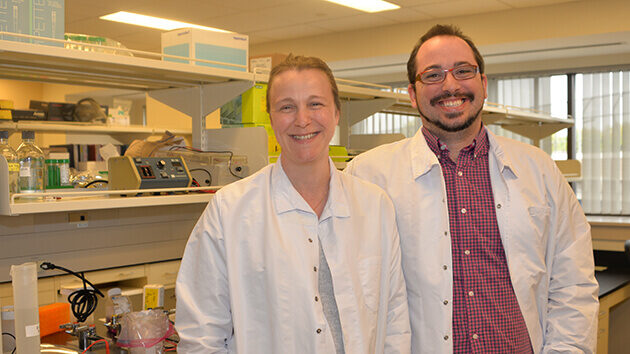
Two scientists from the Department of Neuroscience and Experimental Therapeutics have been awarded a three-year CMTA-STAR grant from the Charcot-Marie-Tooth Association, the largest philanthropic funder of research on Charcot-Marie-Tooth (CMT) disease, to explore an innovative approach to treat CMT1A.
The prestigious CMTA-STAR (Strategy to Accelerate Research) program is designed to support projects that directly target the biology of CMT, funding research that takes promising ideas from the lab and moves them closer to the clinic.
CMT type 1A (CMT1A) is the most common inherited neuropathy, affecting approximately one in 2,500 people in the U.S. It occurs when there is an extra copy of the PMP22 gene, leading to the overproduction of the PMP22 protein. This disrupts the function of Schwann cells, which create the protective covering (myelin) around nerves.
People with CMT1A have nerve damage, muscle weakness, and difficulty walking. There is currently no treatment or cure for the disease.
In this study, Assistant Professor Sophie Belin, PhD, and Associate Professor Yannick Poitelon, PhD, will test drugs known as TEAD inhibitors to target the root cause of CMT1A.
Originally developed to treat cancer, TEAD inhibitors have been shown to lower PMP22 levels in laboratory models. Drs. Belin and Poitelon will test whether TEAD inhibitors also reduce PMP22 levels in Schwann cells, thereby improving their function, restoring nerve health, and improving mobility.
“Our goal is to determine the safest and most effective drug doses and treatment timelines,” said Dr. Poitelon. “If successful, this work could lead to the first disease-modifying treatment for CMT1A, rather than just managing symptoms.”