Albany Medical College Graduate Awarded 2025 Albany Prize for Identifying Hormone Leptin
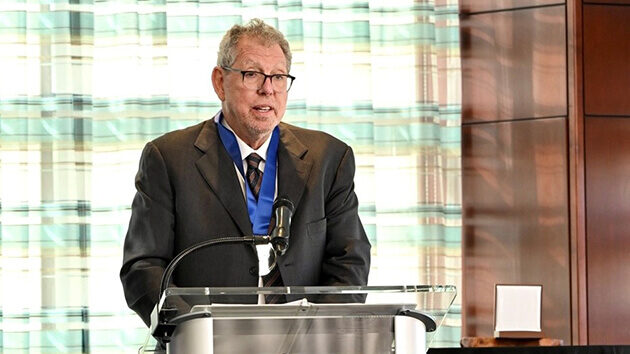
The discovery by Rockefeller University’s Jeffrey M. Friedman, MD, PhD, established a biological basis for obesity and has led to life-saving treatments
The 2025 Albany Medical Center Prize in Medicine and Biomedical Research has been awarded to Jeffrey M. Friedman, MD, PhD, whose discovery of the hormone leptin and its role in regulating food intake and body weight established a biological basis for obesity, has led to a life-saving treatment for people with the metabolic disorder lipodystrophy, and opened the era of molecular exploration in the field of obesity research.
A 1977 graduate of Albany Medical College, Dr. Friedman is the Marilyn M. Simpson Professor in the Laboratory of Molecular Genetics at The Rockefeller University in New York City and an investigator with the Howard Hughes Medical Institute. He accepted the award at a special ceremony in Albany on Oct. 16.
Obesity is recognized as a major public health concern, affecting millions of people worldwide. In addition to predisposing people to Type 2 diabetes, it also increases the risk for other serious chronic health conditions, including heart disease, stroke, sleep apnea, and some types of cancer.
“Dr. Friedman’s work epitomizes the purpose of the Albany Prize to honor advances in scientific research that have significantly impacted biomedical science and improved patient care,” said Alan S. Boulos, MD ’94, executive vice president of the Albany Med Health System, The Lynne and Mark D. Groban, MD ’67 Distinguished Dean of Albany Medical College, and chair of the National Selection Committee.
“His groundbreaking discovery of leptin revolutionized our understanding of the molecular genetics that drive how our body regulates food intake and weight,” he continued. “This key discovery established that obesity is grounded in biology and opened new channels for research on obesity and other metabolic diseases. It has also led to an FDA-approved drug to treat the severe metabolic disorder lipodystrophy, and opened the door for potential treatments for a range of other metabolic diseases.”
Path to Discovery
A graduate of Rensselaer Polytechnic Institute’s and Albany Medical College’s combined degree program, Dr. Friedman stayed in the Capital Region to complete his residency training in internal medicine at Albany Medical Center. After earning his doctoral degree in molecular genetics at Rockefeller, he joined the faculty there in 1986.
At Rockefeller, Dr. Friedman began working with ob/ob (obese) mouse models to study the molecular genetics that control metabolism and appetite. In a breakthrough nearly ten years later, in 1994, he identified a hormone produced by adipose (fat) cells as well as its receptor in the brain. He named the hormone leptin, from the Greek word leptos (“thin”).
Leptin was not present in the ob/ob mice, but when these leptin-deficient mice were given leptin, the researchers saw dramatic weight loss.
By uncovering this new endocrine system, Dr. Friedman offered for the first time a biological basis for obesity.
Dr. Friedman and his team subsequently demonstrated how leptin acts in the brain to regulate food intake, signaling when there is adequate fat tissue and thus telling the body to stop eating. They also showed how leptin regulates body weight, energy expenditure, and other physiological processes.
In a twist, further studies showed that the majority of severely obese people in the general population are not leptin deficient. Instead, they are leptin-resistant, similar to how people with Type 2 diabetes are insulin-resistant. These individuals have high levels of leptin, but their bodies have built up such a resistance to it that leptin’s “stop eating” signal to the brain is no longer effective at controlling appetite.
Impact on Health and Biomedical Science
Since the identification of leptin, Dr. Friedman’s insights have led to important advances in understanding the endocrine system and the neural mechanisms that regulate food intake and body weight. His work has also led to life-saving treatments.
In 2014, the FDA approved a leptin-based drug to treat lipodystrophy, a severe metabolic disorder in which the body can’t make or maintain fat tissue. The reduced fat mass leads to reduced leptin levels, which is associated with other health conditions, including severe diabetes and fatty liver disease. Remarkably, lipodystrophy patients treated with the leptin therapy no longer needed to take insulin.
Current studies indicate that the FDA-approved treatment could also benefit a significant subset of people with Type 2 diabetes.
In addition, leptin-based therapies have shown promise for other conditions associated with low leptin levels, including Type 1 diabetes, non-hereditary obesity, Rabson-Mendenhall Syndrome, a rare genetic disorder characterized by severe insulin resistance, and hypothalamic amenorrhea, an infertility syndrome in thin females that often affects athletes.
Dr. Friedman’s identification of leptin profoundly changed our understanding of the pathogenesis of obesity and the endocrine system. But his work is not finished. In his current research, he seeks to understand the neural mechanisms that control appetite and other innate behaviors. He and his lab team are also studying an inhibitor that would block the signaling molecule that counteracts leptin’s effects, which has shown promising results in mouse models.
The Albany Prize
In 2000, the Marty and Dorothy Silverman Foundation dedicated $50 million to award the $500,000 Albany Prize annually for 100 years. It is intended to encourage and recognize extraordinary and sustained contributions to improving health care while promoting innovative biomedical research. Each recipient is nominated by their peers, and the prize is one of the most significant in medicine and science in the United States.
Two previous Nobel Prize winners have been among the ranks of researchers honored with the Albany Prize, and ten recipients have gone on to win the Nobel Prize, including Katalin Karikó, PhD, and Drew Weissman, MD, PhD, for their discoveries that enabled the development of effective mRNA vaccines against Covid-19; James P. Allison, PhD, for his development of immune checkpoint blockade to treat cancer; Shinya Yamanaka, MD, PhD, a leading stem cell scientist; Elizabeth Blackburn, PhD, who discovered the molecular nature of telomeres; Bruce Beutler, MD, and the late Ralph Steinman, MD, for their discoveries regarding the detailed workings of the immune system; Robert Lefkowitz, MD, for his work on cell receptors; and Emmanuelle Charpentier, PhD, and Jennifer Doudna, PhD, for their development of a method of genome editing.
Additional information about the Albany Prize, including Dr. Friedman’s photo and extended bio and a complete list of previous recipients, is available on the Albany Prize webpages.